David Solomon, CEO of Goldman Sachs (L), Jamie Dimon, CEO of JP Morgan (C), and Ted Pick, CEO of Morgan Stanley.
CNBC | Getty Images | CNBC
Highlights
- Major Wall Street banks are experiencing record profits, driven by AI stock trading and increased demand for capital.
- The Big Three—Goldman Sachs, JPMorgan, and Morgan Stanley—dominate the equities market, earning nearly 80% of total revenue for the sector.
- Regulatory changes have eased capital requirements, allowing banks to expand their balance sheet capabilities, which is contributing to a significant rise in equity trading activities.
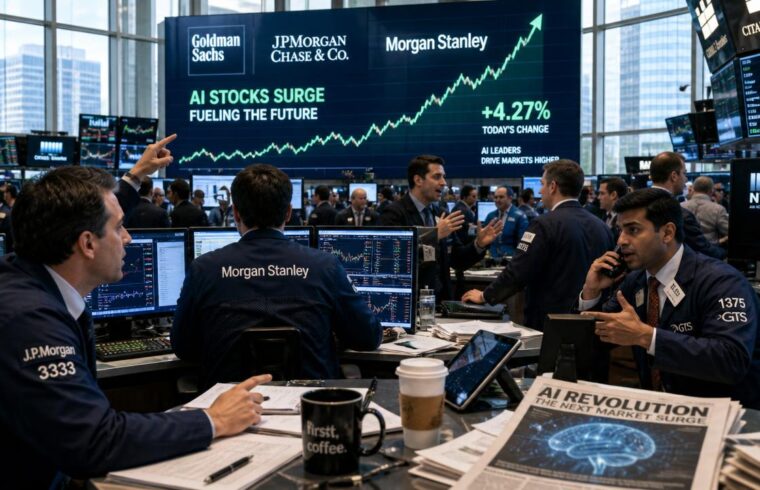
This year, the financial world has witnessed an unprecedented surge in equities trading, largely fueled by a booming artificial intelligence (AI) market. Wall Street’s largest banks are reaping the rewards, already surpassing previous records even with one quarter left to go in the fiscal year. According to company filings, the five biggest investment banks have collectively generated around $67 billion in equities revenue through September 30, marking a $7 billion increase over their all-time high in 2025.
The impressive figures highlight the critical role that AI stocks and relaxed capital rules have played in shaping this lucrative landscape. Goldman Sachs, JPMorgan Chase, and Morgan Stanley have emerged as the dominant figures within this sphere, together accounting for a staggering $52 billion in stock trading revenue, which amounts to nearly 80% of the total. The competition among these Big Three is fierce, as they position themselves to leverage the thriving AI mega trade.
Core of the Boom
A flourishing stock market, combined with increased trading activity from both institutional and retail investors, has led to a remarkable era of profitability for Wall Street banks. In particular, the concept of prime brokerage—where banks provide hedge funds with essential services such as margin loans and securities lending—has become a pivotal area for growth. The ability to offer these services allows the Big Three to capitalize on heightened leverage demands from funds eager to amplify their investments, particularly in AI-related sectors.
The surge in equities financing activities is exemplified by Goldman Sachs, which reported a 96% increase in revenues from this segment in the third quarter, reaching a record-breaking $3.37 billion. Other banks, including JPMorgan and Morgan Stanley, have also noted similar trends, further underscoring an industry-wide shift towards robust, margin-heavy lending operations. This transformation is seen as crucial for these banks to remain competitive as they adapt to the changing market dynamics and evolving client needs.
Future Implications
The implications of this major equities boom extend beyond mere financial gains; they raise critical questions about the sustainability of this growth and the associated risks. Industry experts have expressed concerns regarding the heightened leverage that hedge funds are currently pursuing. As international hedge fund assets reportedly hit $13 trillion, a potential market correction fueled by excessive market positions could introduce instability. The International Monetary Fund has raised alarms about the risks that concentrated positions and correlated selling carry for market functionality.
Despite these concerns, market leaders like JPMorgan argue that the landscape isn’t as precarious as some would suggest. They point to refined risk management practices, such as collateral use and regular stress testing, to mitigate downside risks. However, analysts remain cautious about the potential impact of these factors, with experts recognizing that while hedge fund leverage is a known risk, it is not one that can be easily dismissed.
Conclusion
As the equities market continues to thrive amid the proliferation of AI stocks and altered capital regulations, industry leaders are poised for significant profitability. However, the challenges posed by increased leverage and potential systemic risks warrant close scrutiny. How can banks balance profitability with robust risk management? What historical patterns can provide insight into the sustainability of such rapid growth? As the year progresses, these questions will linger in the minds of stakeholders across the financial sector.
Editorial content by Evelyn Martinez