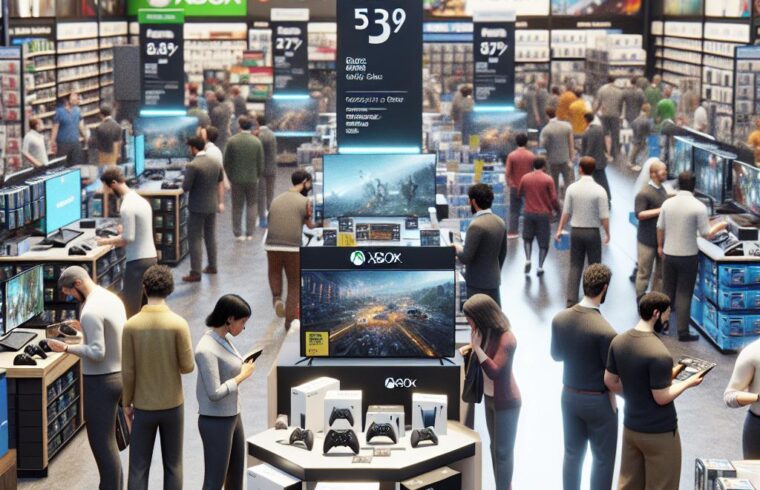
This morning, we learned that November was a surprisingly bad month for video game spending across the board. Hardware dollar sales and physical software unit sales were both at the lowest we’ve seen since 1995, and all three major console makers were down year-on-year in what’s traditionally the biggest month for retail. But one console in particular is really struggling, and that’s the Xbox.
According to Circana senior director Mat Piscatella speaking to IGN, Xbox Series consoles dollar sales were down a whopping 70% year-over-year. That’s… a huge drop. Other consoles were also down, with PS5 down 40% year-over-year, and the newly-released Nintendo Switch 2 combined with Switch 1 down 10% from sales of Switch 1 only last year, which is pretty shocking on its own.
Current State of Video Game Sales
November 2023 has ushered in a troubling era for video game sales with hardware revenues and physical software unit sales plummeting to levels not seen since 1995. Traditionally deemed a peak shopping month, this November has proven to be the reverse, leaving major console manufacturers facing significant year-over-year declines. The most alarming statistics emerge from the Xbox Series consoles, experiencing a staggering 70% drop in dollar sales compared to last year. Such figures not only signal a stark downturn for Xbox but also reflect broader market challenges impacting all vendors in the gaming industry.
Interestingly, while Xbox faces unparalleled declines, rival consoles such as the PlayStation and Nintendo Switch have also reported declines—though not as severe. The PS5 is down 40%, and the combined sales of the original Switch and the newly launched Switch 2 have dropped by 10%. This paints a worrying picture of an industry grappling with pressures that could reshape its future.
Factors Contributing to Decline
Several factors are contributing to Xbox’s unprecedented slump. The platform is now five years into its lifecycle, marking a plateau in fresh hardware efforts while the competition introduces new models and enticing upgrades. Such stasis leaves potential customers with little motivation to invest in an Xbox Series console. Recent price hikes, including a 30% rise in average unit prices year-over-year for Xbox consoles, add financial strain during an economic climate increasingly characterized by high inflation and soaring consumer debt.
Moreover, the Xbox Series consoles face heightened competition for consumer attention. As a result of these current distressing conditions, families may opt for less expensive alternatives or innovative play solutions instead of traditional gaming hardware—especially when previous price points like that of the Xbox Series S, originally retailing at $300, have surged to $400 or more. Such increasing costs, combined with broader economic uncertainties, contribute to a significant contraction in Xbox’s user base.
Implications and the Future of Xbox
The fallout from this November’s disappointing sales figures prompts a larger conversation about the future of Xbox and its strategies moving forward. Despite the continued decline in hardware sales, Microsoft has indicated plans to persist in its pursuit of console development, potentially transitioning to a hybrid model that blurs the line between traditional gaming and PC platforms. However, their ongoing pivot toward a multi-platform strategy raises a crucial question: Is hardware sales still a priority for Xbox, or does the company see more success in software and service delivery?
The struggles evident in the current Xbox market landscape suggest broader implications for gaming franchises and consumers alike. With major titles failing to sway consumers to purchase new hardware, the question arises whether exclusive releases even matter as players diversify their gaming experiences across different systems. As Xbox leans more into cloud services and multiplatform releases, the gaming industry itself might need to reevaluate what it means to thrive amid changing player expectations and economic realities.
In conclusion, November’s historically poor performance raises critical questions for the future of Xbox and the gaming landscape as a whole. The intersection of pricing, competition, and evolving consumer preferences leads to reflections on possible transformations within the industry. How will Xbox strategically navigate its challenges, and could it reshape its business model in a way that emphasizes software over hardware? Are consumers ready to invest in expensive hardware, or will they continue seeking more cost-effective alternatives?
Editorial content by Evelyn Martinez